


I have a friend (yes, I know, I know, even I find that hard to believe) who vacationed in Kona years ago, fell in love with it, and now wants to move here.
I told him that we’ve had a few serious weather events.
He gave me the smile of someone who has done “research” on a phone while sitting safely 2,500 miles away. “I’m not worried,” he said. “Hualalai, Mauna Kea, and Mauna Loa protect Kona from storms.”
I told him, “The three volcanoes — the Pillars of Pele — are real. The promise of protection is the myth.”
The Volcanoes Do Not Have to Fail for Our Story About Them to Fail
A Myth Begins With Something That Keeps Working: Sit on a Kona lanai in the afternoon, and you can watch the case make itself. Clouds pile up on the mountains. Rain falls mauka. Kona stays dry, bright, almost smug. Hilo gets soaked. Kona gets sunset: same island, different world.
Why?
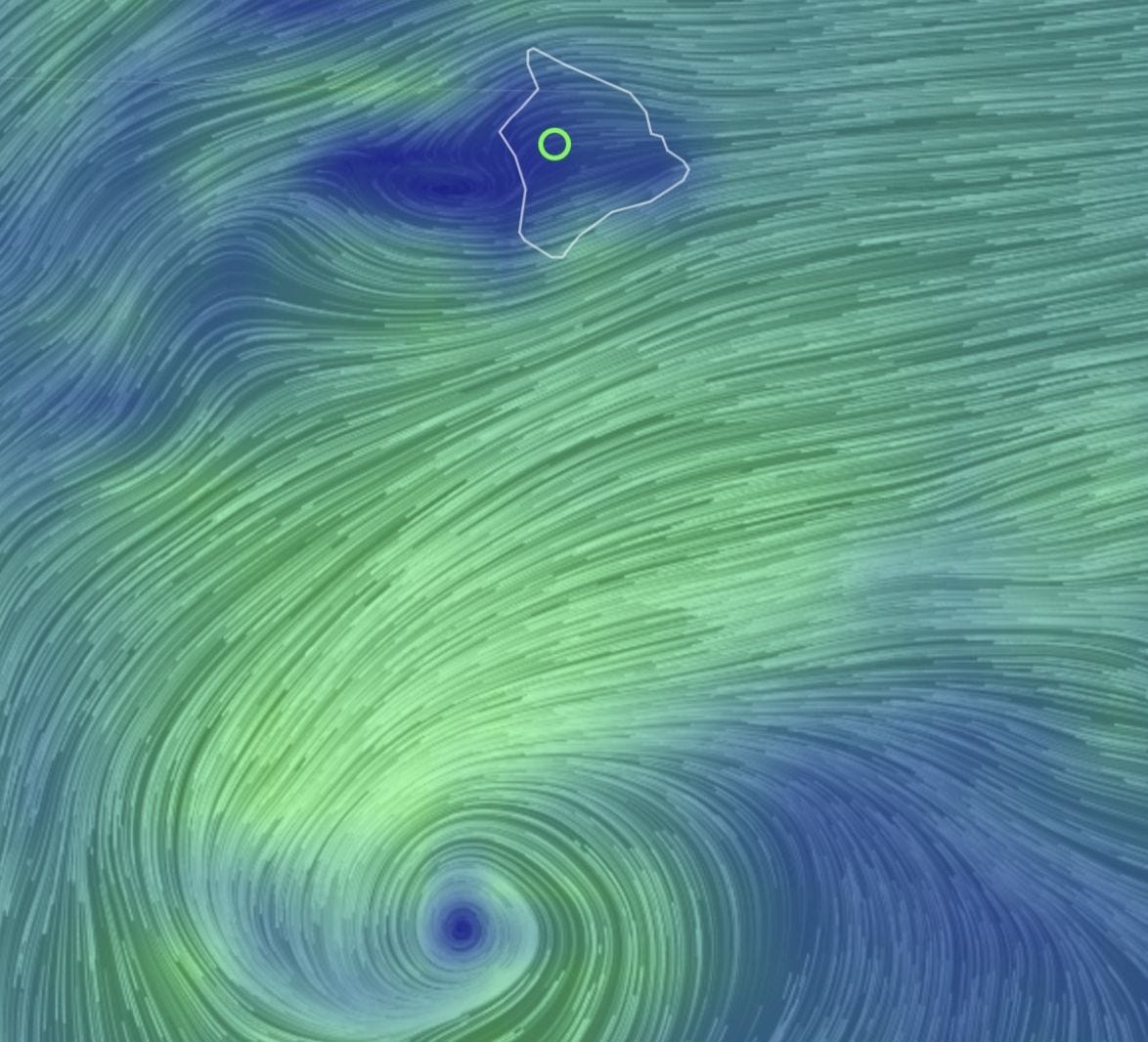
It Isn’t Folklore. It’s Topography: Trade winds from the east hit the volcanoes, rise, cool, and dump their moisture on the windward side — Hilo’s side. That leaves Kona, on the leeward side, drier. The mountains truly do obstruct, redirect, and shape weather. Kona is sheltered for a reason.
A half-truth borrows its authority from the half that works.
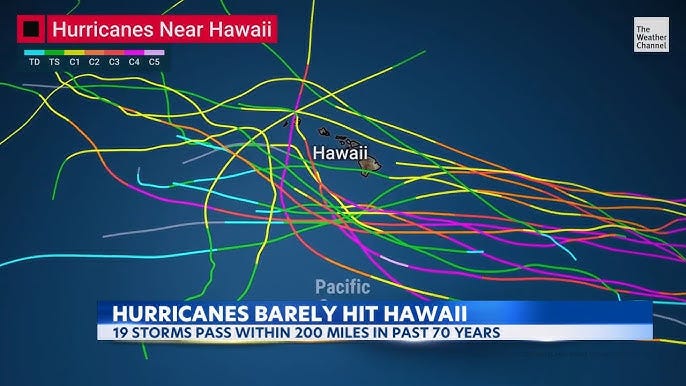
Courtesy of the Weather Channel - before this year’s hurricanes.
The Half-Truth: Hawaii doesn’t (rarely) is hit by hurricanes.
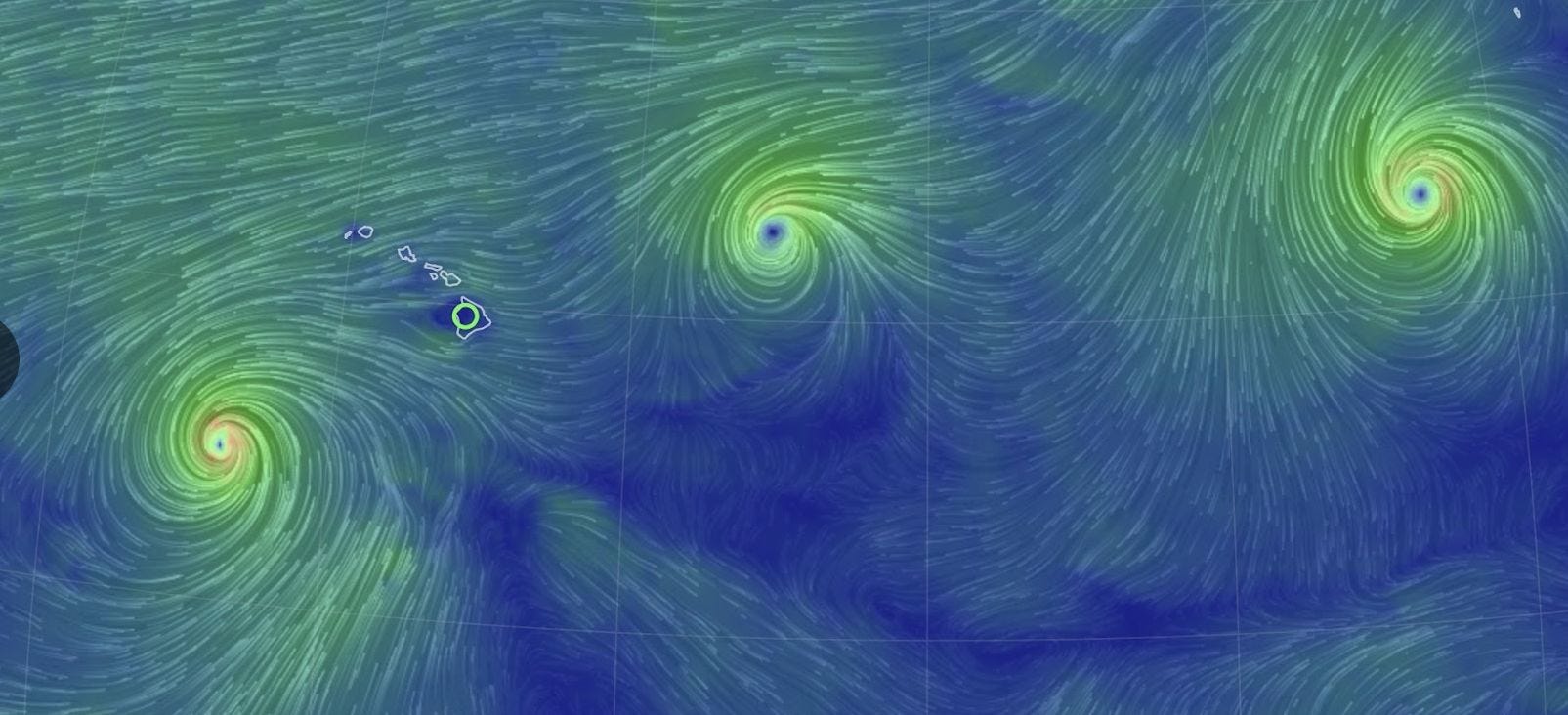
2026 Satellite Map
Another The Half-Truth: Kona Is Protected by the Volcanoes: And yes — most of the time, it is.
A half-truth is a fact that forgot where it stops. Sit on a Kona lanai, and you can watch it happen: the clouds gather on Hualalai, dark and heavy, and stay there.
The Pillars of Pele protect Kona from one set of conditions extremely well. That part is true. They shelter a way of life, a local rhythm, a whole climate personality. They provide evidence. Receipts. Sunshine where there “should” be rain.
That’s why the story survives.
Half-truths endure because the true half keeps producing proof.
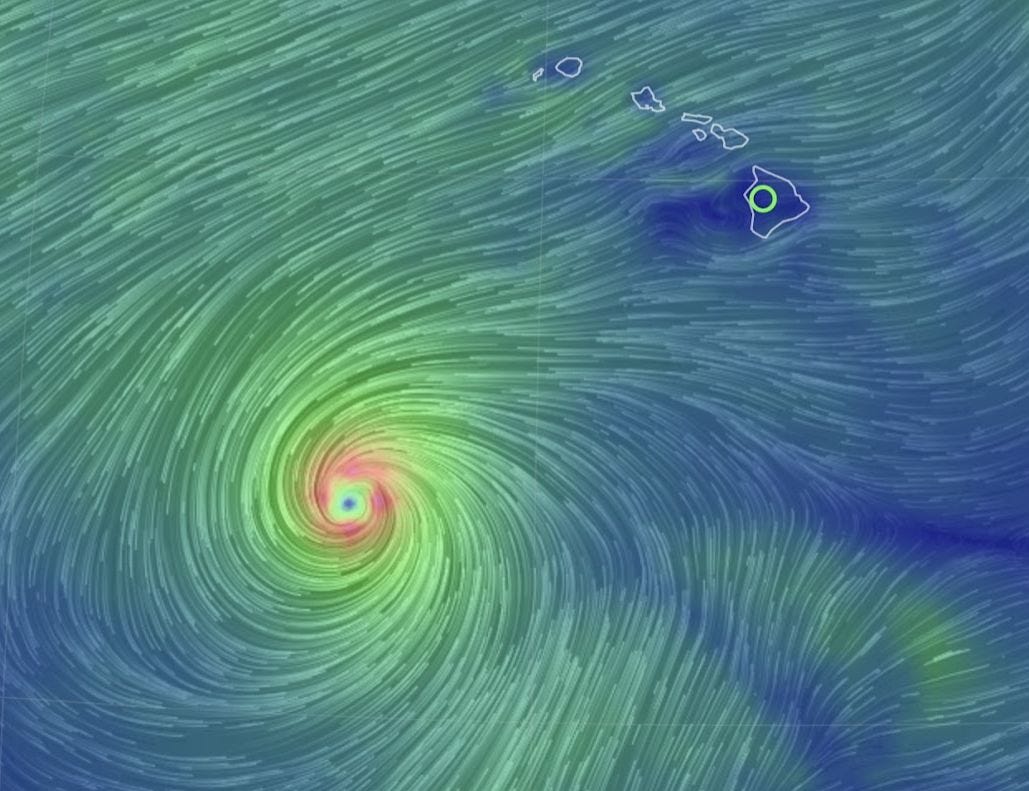
The Other Half of the Truth: Not All Storms Arrive From the East. And that is where the mythology gets expensive.
A Wall Protects Only the Direction It Faces: France built the Maginot Line to face Germany. It was brilliant engineering.
The Germans, well, they went around it through Belgium.
The volcanoes are formidable against weather driven by the prevailing trades from the east and northeast. But weather is not a polite guest. It does not always come through the front door.
Sometimes it comes around back.
Sometimes it comes from the south.
Hurricane Iniki tore into Kaua’i from the south in 1992. Hurricane Lane approached from the south in 2018, stalled, and caused catastrophic flooding without even making landfall.
The volcanoes stood their post. The storms took another route.
The Pillars of Pele Are Tall. Weather Systems Are Taller: Any storm coming from the east has to confront Mauna Kea and Mauna Loa, both just under 14,000 feet, and then Hualalai on the descent toward Kona.
But major storm systems tower 40,000 to 50,000 feet into the atmosphere. From that height, the mountains may look less like a fortress and more like a speed bump.
That’s too simple, too.
Our volcanoes can break the storm that meets them; they cannot stop the storm that misses them.
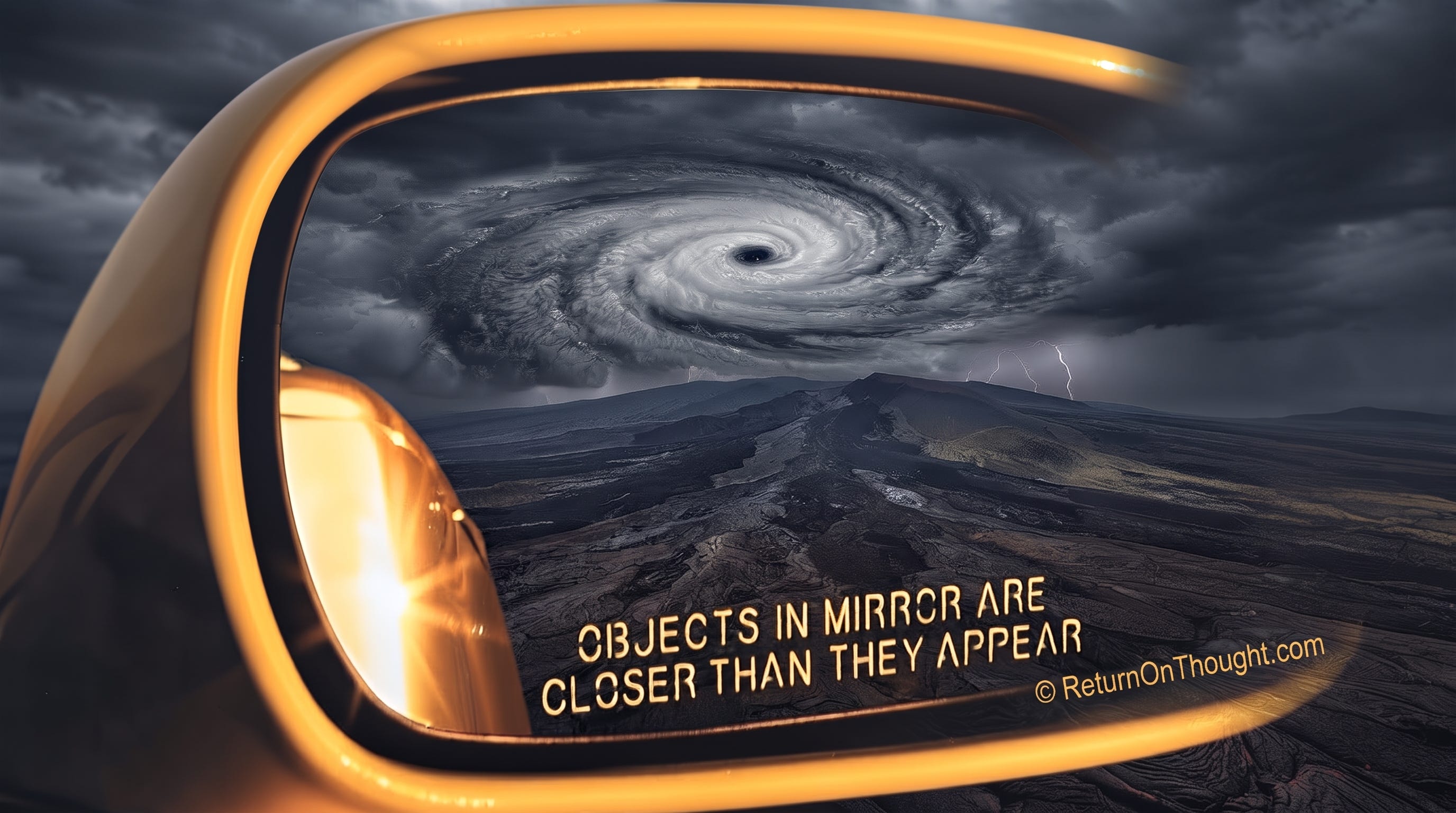
The Pillars of Pele Deserve Respect, Not Worship: They reduce some risks. They do not erase risk. Protection from one direction is not protection from all directions.
That is the whole argument.
Not that the mountains do nothing.
Not that the myth came from nowhere.
Not that Kona is foolish to love its shelter.
Only this:
The shelter is real.
The guarantee is not.
So the move is not to stop believing in the Pillars of Pele.
The move is to stop asking them to do jobs they never had.
Let the mountains guard the east.
You guard the south.
Trust what protects you; prepare for what doesn’t.
Respect Pele: Honor the wall; prepare for the road around it.