

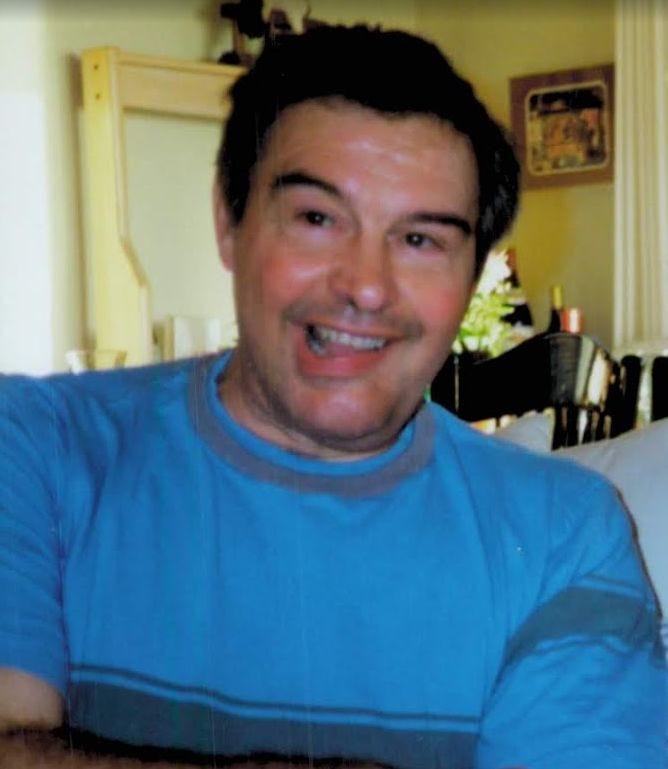
A story about Louie and Washington’s Death With Dignity Law.
Assisted Suicide: At first, I thought I was going to an assisted suicide. My father’s.
That was the phrase I used, ‘assisted suicide,’ on the phone and in my head, for the two days before I flew.
Assisted suicide. Cold words. Harsh words. Abrupt words.
I soon understood it wasn’t ‘assisted suicide.’ It was…
Death With Dignity: And once more I made an erroneous assumption.
I took it for a euphemism, the kind of name a state gives something it has decided to allow. Just soft words assigned to mask a hard situation.
After experiencing it with Louie, I realized it wasn't a euphemism. It was a description.
By the end of that Thursday, I had put my phrase down, and I have not picked it up since.
But I am getting ahead of myself.
My stepbrother called. He never calls, nor do I. Same father, different locations, different generations.
Next Week. Thursday. Two In The Afternoon: That was Louie. Set the time, keep the time, get the job done. I recognized him in it the way you recognize handwriting. The appointment had his manners: fixed, but plan on arriving a little early, and not open to discussion.
Recognizing him did not make it ordinary.
Before I tell you about that Thursday at two in the afternoon, I have to tell you about the man who kept the schedule.
Louie: Nobody called him Lou.
Affection Has An Extra Syllable: You can hear affection in what the years do to a name.
Affection means Bill stays Billy. Sam stays Sammy. John stays Johnny. Most men outgrow the extra syllable around the time they outgrow their first bicycle. A few never do, and it is never their decision.
Affection Is Bestowed: The people around them keep it, because it is the sound of liking him.
Ninety-Two: He was 92, and he was still Louie; not Lou. The extra syllable had been on the job his whole life and never asked to retire.
Nobody called him Lou… except me. I called him Lou throughout high school to annoy him. It never worked.
Growing Up: To me, he was the family's backbone: fair, honest, and good with people. When something went wrong, I watched him because he stayed calm and made the right decision.
A Song Is Just A Song - Until It Applies To You: Harry Chapin’s “Cat’s in the Cradle” came out in 1974. Many people, regardless of age, know it:
And he was talking 'fore I knew it, and as he grew
He'd say "I'm gonna be like you, dad"
"You know I'm gonna be like you"
Harry Chapin
Louie was stubborn. I got that from him.
He worked hard. I got that from him too.
For most of his life, he was healthy in a way that made other people check their own habits. Until about ninety, he drove a mile and a half to the gym nearly every day.
I have always suspected the other drivers on that road got a workout too.
On the way home, he stopped at the post office. The gym, the mail, his own car, his own errands. Small things, but they belonged to a man who did his own things. His way.
His back was the exception. He did heavy work in his twenties during his four years in the Air Force. He called it the price of serving his country and never put it on anyone else’s bill.
His back told him which nights he could get comfortable and which nights he couldn’t. He got up tired and started the day anyway.
He was in management from the time he left the military. Long weekdays, most Saturdays. And still he was in the stands at my games.
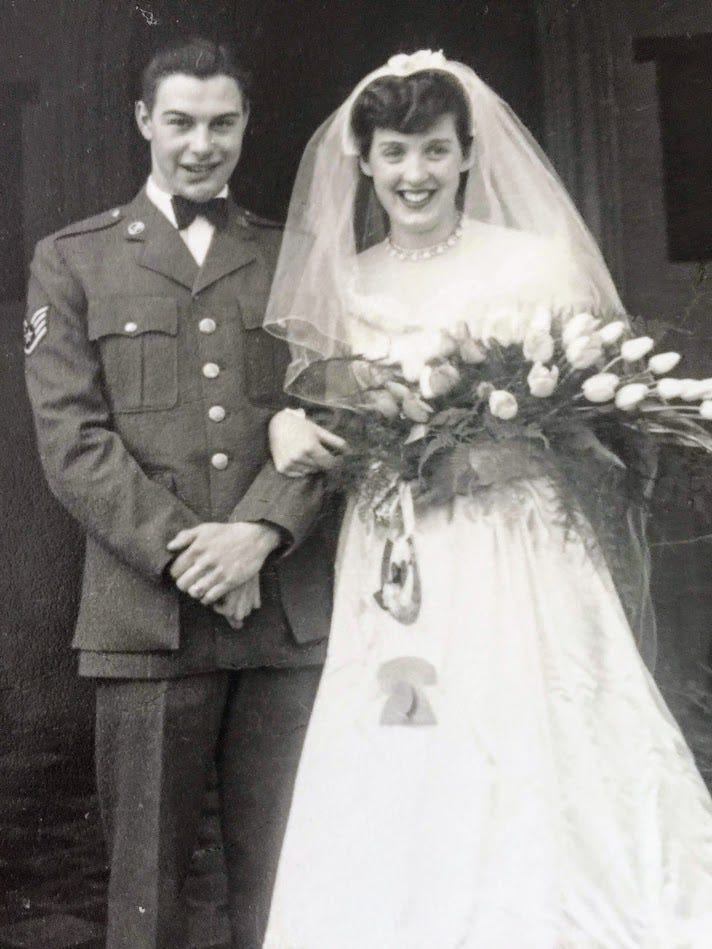
Louie started in the military. Here he is shown with my mother.
The Years After High School: College took me an hour from home. An hour was far enough to be free, and I liked it. Like Lou, I was very independent. I did not come home much.
During my first year of college, my parents divorced; I later learned they had held the marriage together until I finished high school so I would have a family to grow up in.
Next, graduate school took me across the country.
Louie and I stayed in touch. I was building a life. His was changing too. A couple of years later, he remarried and had two more sons. They grew up with him while I was starting my career and my own marriage.
When his two boys finished high school, that marriage ended too.
My wife, our daughter, and I were in Southern California then.
Fast forward - Louie had retired near Seattle.
I've long since retired; my son's moved away
I called him up just the other day
I said, I'd like to see you if you don't mind
Harry Chapin
C’mon Down: We invited him down for a couple of weeks. Enjoy his retirement.
He stayed seven months.
Our honey-do list had been waiting years for someone who actually wanted it. He fixed things.
When there weren’t jobs, he made them.

Louie kept himself busy during his ‘extended’ stay.
He made lifeguard chairs for us.
And he got to know his granddaughter.
He took her to the beach. They went out to lunch. She helped him with his projects around the house, in the way a small girl helps, and he let her.
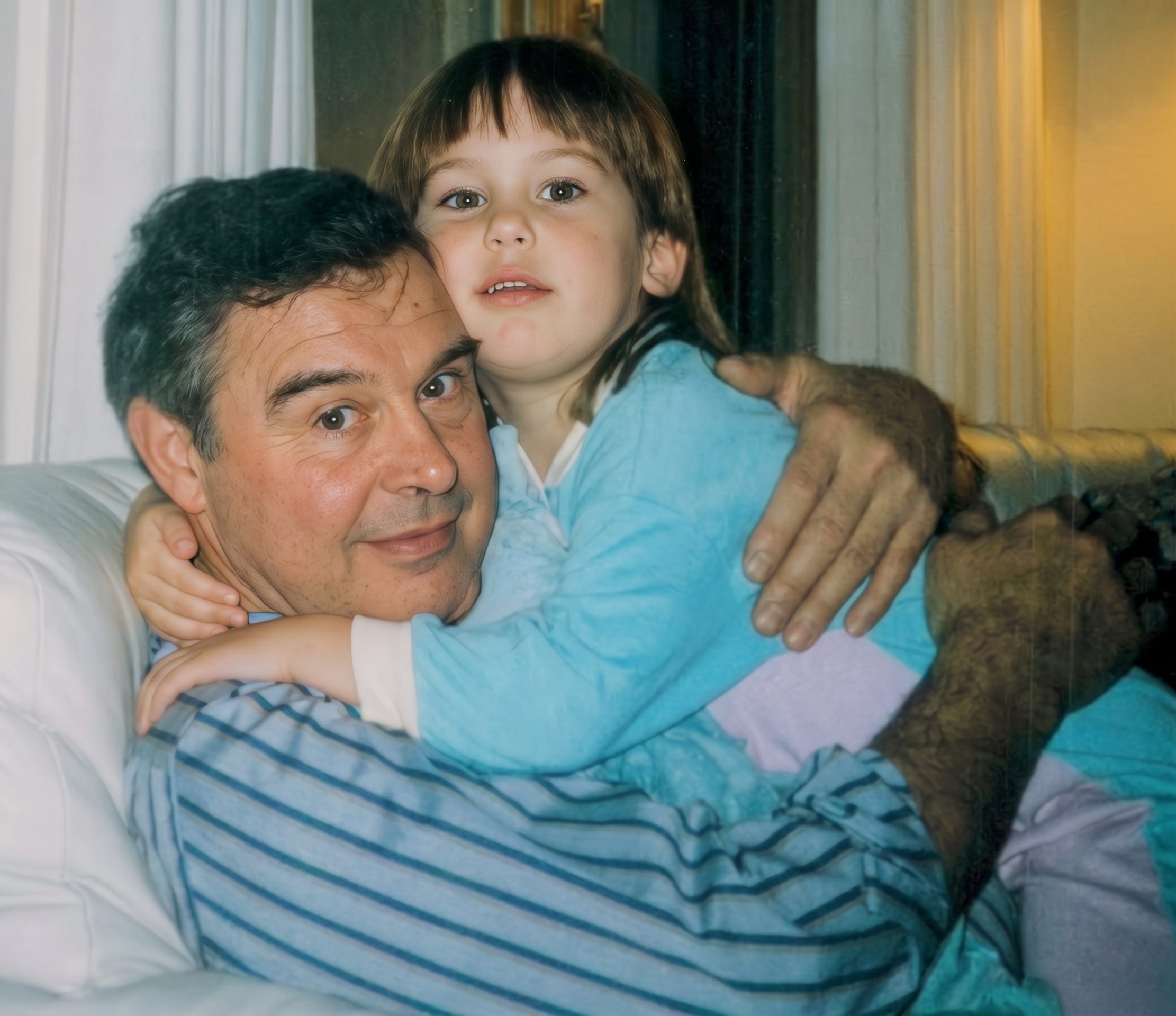
When Louie was a father, he was often busy.
When he became a grandfather, he had time.
A Father, Then A Grandfather: I had known him all my life as my father. In my own house I got to watch him be her grandfather. Nothing had to fit inside a day off; every day was.
There was lunch. There was the beach. There was whatever he had taken apart that week, with her in the middle of it.
I will say the thing I am not proud of. I was a little jealous. Yeah, I understand my independence was a big part of the reason.
Still. Louie spent more days with my daughter in six months than he had spent with me in years. I did not say so then. I say it now because it is true, and because a story about a father is worth little if the son in it is only grateful.
The father I know best belongs to my first eighteen years and that half-year in California. Other people hold other stretches of him. None of us holds all of it.
Distanced Again: Five years later, he married once more. The same woman, the mother of his two younger sons.
Lifestyle choices moved my family. Then it moved us again. Holidays and birthdays by phone, visits by exception. No single leaving explains the distance. Years of separate days added up the way separate days do.
We would talk, and he kept me up-to-date with all those medical conditions that seem to pile on as you age: back surgery, leg issues, back surgery again, a colonoscopy, and then a diagnosis of cancer.
I never really knew when I would see him.
Except…
This Time I Knew When; Exactly: One of his sons called. Louie was not doing well. The back had kept hurting through two operations at the VA. Now the cancer… it was terminal.
He was living with constant discomfort; his body was failing. That is the word that reached me. I was not inside his body, and I will not pretend to measure what he carried. But Louie always kept his pain private.
Louie Chose Death with Dignity: Two doctors had signed. The medication came from a compounding pharmacy; Medicare didn't cover it, and it ran about seven hundred dollars.
His son, both tearfully and matter-of-factly, gave me the day and the hour.
All the dates and times were now confirmed, except my arrival.
I had been remiss in making time, spending time with Louie.
But we’ll get together then
You know we’ll have a good time then
Harry Chapin
Next Week. Thursday. Two In The Afternoon: I flew in two days early. For once, we didn't have to arrange the visit for when life got less busy.
Someday Always Echoed Its Name, “Someday.” The date did what thirty years of ‘someday’ couldn’t. It made time for me and put me on a plane just to see him.
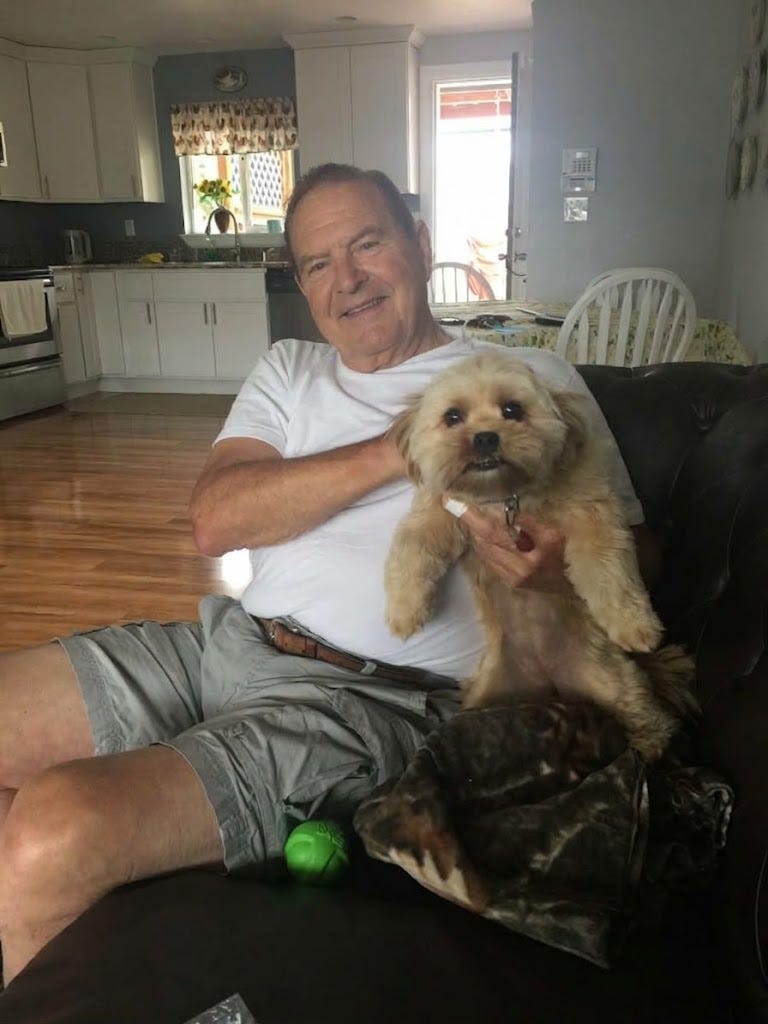
Louie, shortly before Death With Dignity.
The Living Room: Louie’s parents immigrated from Italy. They brought with them hope and dreams and promise. And they made it work by working hard.
They also brought a social way of life. Every weekend was a get-together either in the kitchen and living room, or in the yard, when Seattle skies gave permission.
It Was Now The Day I Dreaded - Thursday At Two… I arrived at ten. I would have come earlier. His wife told me ten was early for him, but she would wake him.
Others came to the door, a few at a time.
Sadly, Many People I Did Not Know: About twenty people were at the house. Sons, grandsons, granddaughters, his wife’s side. People who had known him at different ages and in different jobs, all under one roof. I was his son, and I did not hold his whole life. Nobody in that house did. The house held more of him than any one of us.
He sat in the middle of the living room, and for two hours he told story after story after story.
The people who had come to watch him die sat and listened to him share how he had lived.
He told how he met his wife in Costa Rica. Jobs he’d had and why he quit them (most confirming his stubbornness). Teaching his kids to drive. Wishing out loud that he had been a better grandfather.
Then it was our turn.
I Shared My Story: He had been plant manager at a mushroom farm, a Green Giant operation, and the company gave us a house on the sprawling acreage. I was in second grade; I know because we moved to the West Coast before third.
One weekend he threw a barbecue for the farm workers, twenty or so men, hamburgers, hot dogs, and beer, in our yard. In retrospect, I realized they were all Hispanic.
His foreman, Jose Mercado, came over to me, a kid, unasked, and said, “Your father is a good man.”
I didn’t know why he was telling me. I already knew that.
Then he said, “Your father is the only one who treats us as equals. I helped him learn Spanish so he could talk with all of us.”
I vaguely remember thinking: what’s Spanish?
I had carried that for decades, and now was the time to share it. Louie was surprised I remembered the barbecue at all, and more surprised I remembered Jose’s full name.
I don’t know why either. It wasn’t the name I had kept. It was the story that kept me.
Other heartfelt stories tugged at all our hearts. Tears began. Then stopped. Then began again.
Around noon, the advocate arrived, and the stories stopped, but the tears did not.
The Death With Dignity Advocate: Washington has people for this. Volunteers. She came to help Louie and tell the rest of us what we were about to experience.
She told us plainly. He would mix the medication into a liquid and drink it himself, fast, because it tastes bad. The law is clear on that point: even in dying, Louie had to administer his own fate.
Have ice cream ready for right after, for his throat. He would get drowsy within a short time and should be in bed by then. His eyes might not close all the way. There might be small movements after, mostly in the hands and arms.
She was not allowed to use a stethoscope, but she would check his breathing and his pulse.
She explained so we understood what to expect. She prepared us for what we would see. The seeing was still ours.
Louie listened as if he were a third party, then suddenly became the first person; he said, “Alright. Let’s go. I am so ready.”
Louie was helped to the bedroom.
His wife said she could not go to watch him die.
She just couldn’t.
Should She Be With Louie When He Passes? The Answer Is Simple: Her presence wasn’t important to Louie. Her comfort was.
Louie had made that simple. It did not matter to him whether she came in. What mattered was that she did what was best for her. If she could not be in the room, he wanted that. If she wanted to be in the room with his sons, he wanted that.
Her choice. Her decision.
Two O’Clock: Louie drank it himself, in the living room, with the family around him.
His face confirmed the bitterness.
The ice cream was mango. Not a flavor he cared for. The advocate said it did the best job on the throat, so mango it was. He ate it.
I wondered if there was an afterlife, would he carry that taste?
Then we helped him to the bedroom.
His wife stayed in the living room. The rest of us went in and talked to him, and he clearly talked back.
He hadn’t started to drift yet.
Then His Wife Came In: I don’t know what changed for her. I just know she came in. She stood by the doorway.
Louie could see her.
Soon, his eyelids dropped, slowly, weighted by his many years, and stopped a quarter inch short. I could still see his eyes. They had the glaze of a man who sat too close to a campfire too long.
Then the glaze was all there was. It became peacefully endless.
He had been cold, so there was a blanket over him. After he passed, his forearms made a few small movements. Maybe his thigh.
Just as the advocate had told us.
The advocate stood in the hall, watching him and watching us. She checked his pulse.
Louie died in the bedroom sometime after two.
I share these details because ‘he looked like he fell asleep’ fails to convey the serenity of the moment.
As I write this now, I still remember his death as peaceful. That is my word for what I saw, not a promise about anyone else’s. Peaceful did not mean easy to watch. It did mean he had decided, and we had come.
His family all left his room… except his wife.
He had lived, right to the end, under his own terms, under his own decisions.
Why should this have been any different?
The Advocate: Afterward, the advocate sat alone in the living room, waiting to see if she could do anything else.
I sat next to her.
I asked if she was a nurse. She wasn’t. I asked how long she'd been doing this. Over seven years. I asked how often… my voice trailed.
71… Seventy-One: “This is number 71,” she said. Then she quickly stopped and added, “But it’s not a number.”
I asked her why she volunteered.
She shared her painful story, which explained why.
Many years ago her son was living in pain that floated in and out of his life, without warning, without control. At its worst, the only relief was a hospital bed and a morphine drip. Other days were better.
One day he told his mother he felt good, good enough to go out, drive, and enjoy life. She was glad he was having a good day.
That evening the police came to her door. He had driven to a high bridge and jumped.
“I felt I should have jumped with him,” she told me. “I could have done more.”
There was no note. She thinks he hurt too much to write one.
The Advocate Couldn’t Help Her Son: She told me, no law like this one existed then. No one could offer him anything but the drip.
“I couldn’t help my son,” she told me. “But I can help others. So I do.”
The conversation had started as small talk about her role as an advocate.
It ended as her story as an angel. Seventy-one was not a number. Neither was Louie.
The Father I Came To See: The arrangements mattered. So did two hours of stories, and a man who could still answer when you spoke to him. None of it changed what we were losing.
I don’t want that afternoon to stand in for the rest of him. In my youth, he worked Saturdays and still made my games. Later in life, he became the grandfather who took a small girl to the beach and let her help. Near the end of his life, he was the man who drove to the gym and stopped at the post office.
Near the end of the song, the father looks at his grown son and sees himself.
He'd grown up just like me
Harry Chapin
The Boy, Though. The Boy Was Me… The grown son listens to the song and sees himself, too.
The song has its story. We have ours. Being in the room at the end did not rewrite the years we saw less of each other. It was one more part of it, not the summary.
He scheduled his death the way he scheduled everything. He gave us the where and when. We did the rest.
His name was Louie.
To me, he was Dad (sometimes Lou).
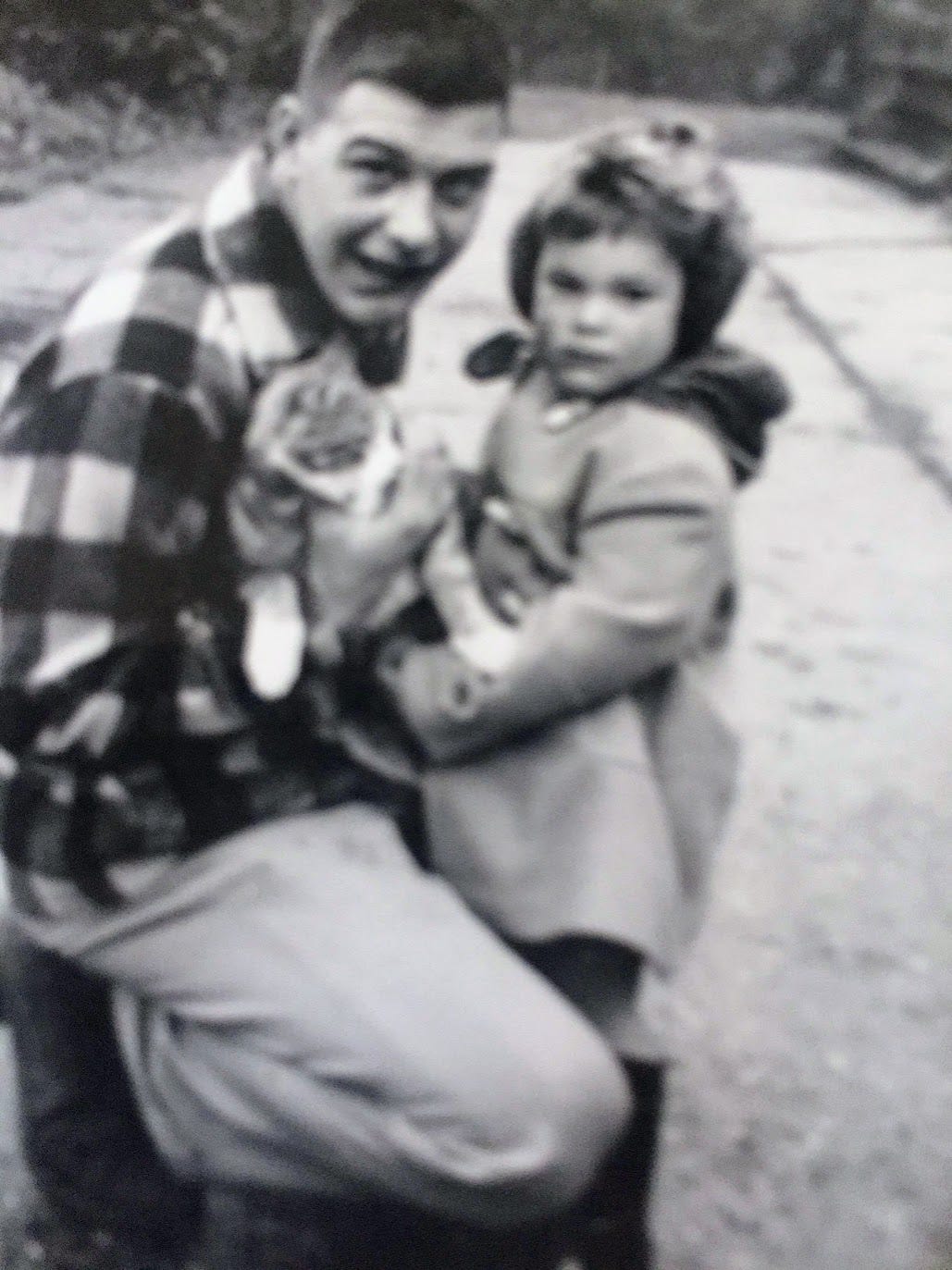
Louie and son…
_______
More Information: Washington State Death with Dignity Act (DWD)
The Law and Regulation
Washington Death with Dignity Act- Chapter 70.245 RCW (statute)
Death with Dignity Act Requirements- Chapter 246-978 WAC (regulation)
Do You Qualify?
Resident of Washington
18 years of age or older
Mentally competent to make an informed decision at the time of your request
Terminally ill with life expectancy of 6 months or less
Able to self-ingest/self-administer the medications
Requirements of the Law
An Attending Provider (AP) who writes the prescriptions
A Consulting Provider (CP) who verifies the diagnosis and prognosis
Two oral requests for DWD with a minimum of 7 days between
A written request for life-ending medications
Step-by-Step Instructions
Make a clear request to use the WA Death with Dignity law to a Medical Doctor (MD), Doctor of Osteopathy (DO), Advanced Registered Nurse Practitioner (ARNP) or Physician Assistant (PA), and be sure it is recorded in your medical chart.
Identify and see an MD, DO, ARNP, or PA who is willing to act as the Attending (Prescribing) Provider.
Identify and see an MD, DO, ARNP, or PA who is willing to act as the Consulting Provider.
After seeing the AP, complete the written request for medications and return it to the AP. Note: Be sure it is witnessed by two people at the time of signing.
At least 7 days after the first oral request was recorded, make a second oral request for DWD to the Attending Provider.
Medications
DDMAPh – a compounded mixture of digoxin, diazepam, morphine, amitriptyline and phenobarbital (current approximate cost $750)
Medications are mixed in 2 ounces of liquid and ingested